






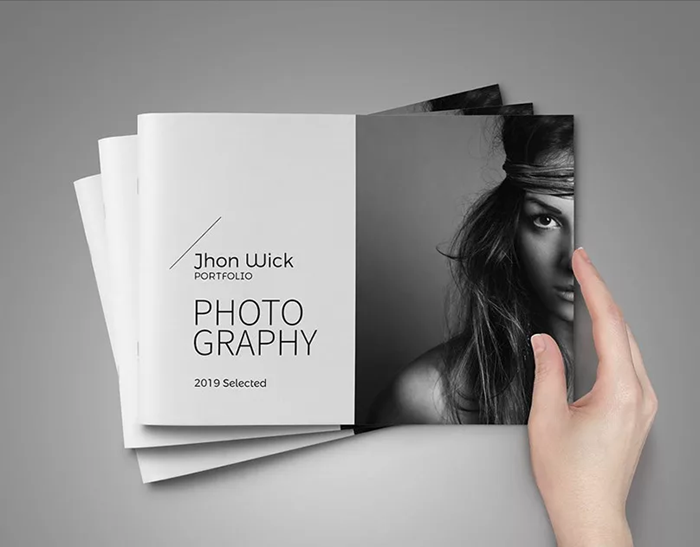
A photographer’s portfolio is not merely a “folder of best shots,” but a carefully constructed story about your style, skill level, and area of expertise. A well-curated portfolio helps a potential client quickly understand exactly what you shoot and how you handle light, color, emotion, and detail.
The goal of a full portfolio (Lavradar photo gallery) is to shorten the journey from viewing your work to making a decision: entrusting you with the shoot. Therefore, what matters is not just a collection of strong individual images, but the logic behind your selection, the sequence, a cohesive visual signature, and a presentation tailored to a specific audience.
The Foundation of a Portfolio: What You Show and for Whom
Start by defining your objective. Portfolios for weddings, commercial work, portraits, family stories, or product photography are all assembled using different principles. A single shot might be artistically stunning, yet fail to demonstrate the competence required for a specific market segment.
Define Your Specialization and Target Audience
Formulate a single sentence: “I shoot [subject] for [audience] to [purpose].” This immediately establishes the criteria for image selection and the tone of the presentation.
If you handle diverse types of assignments, it is better to create separate collections rather than mixing genres in a single stream.
- Weddings: emotions, reportage, details, posed shots, a cohesive series from a single event.
- Portraits: working with the subject, lighting, posing/movement, skin retouching, variety of looks.
- Commercial: brand alignment, clean composition, color, glare control, a series tailored to a specific brief.
- Product photography: textures, geometry, technical precision, consistent catalog style.
Curate a “core” selection of your best work
A key rule: a portfolio is judged by its weakest shot, not its strongest. Remove anything questionable—sloppy backgrounds, poor angles, lighting issues, repetitive subjects, or questionable retouching.
- Gather candidates: put 80–150 shots into a single folder.
- Narrow the selection down to 30–50 based on quality and genre relevance.
- Keep 15–25 for your “showcase” and 40–80 for an extended gallery (if needed).
If you are just starting out, it is better to honestly present a smaller, stronger selection than to pad the volume with mediocre shots.
Defining the goal: commercial work, a creative showcase, or admissions
A portfolio only works when it clearly answers the question: “What is this portfolio for?” The same set of images might look powerful as a personal project yet fail to convince a client—or conversely, it might sell a service effectively but fail to reveal the artist’s potential to an admissions committee.
Define one primary goal and align everything with it: genres, number of works, presentation order, captions, format (website, folder, or prints), and even the tone of the descriptions. If you have multiple goals, it is better to create separate versions of your portfolio than to try to combine incompatible elements into a single set.
Three scenarios and what matters for each
- Commercial commissions: showcase a specific service and consistent results. You need series from actual shoots, predictable quality, clear examples of what the client can expect, relevant case studies (weddings, portraits, product photography, brand content), and a curated selection free of “random” genres.
- Creative showcase: demonstrate your unique artistic voice, concepts, and coherence. Focus on projects, visual concepts, cohesive series, experimentation, a distinctive style, and appropriate variety—all while maintaining a consistent tone.
- Admissions: tailor your portfolio to the specific requirements of the program and the admissions committee. You need technical proficiency, the ability to work with themes and series, and a variety of tasks (lighting, composition, genres), as well as a cohesive presentation and a rationale for your choice of work.
- Define your goal in a single sentence (exactly what you want to achieve and from whom).
- Choose your audience: a client, a curator/gallery, or a committee/instructors.
- Gather a relevant pool of images and keep only those that directly support your goal.
- Create a structure: a strong opening, logical sections, and a powerful conclusion.
- Check for consistency: editing style, tone, captions, formats, and sequence.
The bottom line: a portfolio is not simply a collection of your “best photos of all time,” but a tool designed for a specific objective. The more precisely you define your goal, the easier it is to select your work, the clearer your skill level appears, and the greater your chances of achieving the desired outcome—whether that means securing commissions, gaining attention for your projects, or successfully getting accepted into a program.